Showing posts with label ECG Amplifier. Show all posts
Wireless | Personality Indicators for Flow State Susceptibility
 Flow is described as almost complete immersion in a task or activity. Previous studies have identified that this intensive involvement leads to lower feelings of self consciousness, allowing concentration on a task to become effortless. Researchers Tain et al. (2017) sought to understand if there are precursors such as personality that would make individuals more susceptible to flow.
Video games were the chosen task for inducing participants’ state of flow. Computer moderated environments (CME’s) can provide clear goals and instant feedback important for eliciting flow. It’s also easy to manipulate CME’s difficulty, which was an important variable for the study. The researchers hypothesized higher reported levels of task difficulty and shyness would be identifiable precursors for an individual’s ability at attaining flow state.
Out of 350 potential participants who applied for the study, those who had the 20 highest and lowest scores for self-reported shyness were chosen. Once selected, these participants were then asked to play a 3D Tetris-like game. The participants had to play at three different intervals lasting six minutes, with each interval varying the speed in which the pieces fell for the purpose of manipulating difficulty. While on the computer, ECG signals of each participant were acquired through BIOPAC’s BioNomadix wireless respiration and ECG amplifier. Participants were asked to complete a questionnaire asking if they realized how much time had passed. Awareness of time passing allowed for measurement of the amount of flow participants were experiencing. ECG signals and self-reported information were then analyzed, comparing differences between the shy and non-shy groups.
Researchers found significant physiological differences between the two groups. The shy group was seen as having a high heart rate when in flow state, and high levels when completing moderate and difficult tasks. Despite physiological differences, researchers weren’t able to identify shyness as a precursor of flow state. When in flow, participants were found to have increased and deeper respiration, while heart rate and variability stayed moderate. Instead of resulting in an increased amount of mental effort, researchers were able to conclude that flow only required a moderate amount of effort but lead to an increased state of parasympathetic activity.
Being that challenge in the task was induced for the purpose of eliciting anxiety in participants, the authors recommended future experiments should asses the amount of skill the user has before the task is administered. The authors identified that more research should be done in this field examining how different mental and physiological measurements could be telling of flow state.
Wireless | Cardiovascular Risk Factors in Children

Wireless | Psychological Stress Across Training Backgrounds
The negative effects of stress on the body have been widely studied. Stress can be defined as a situation that is causing the current state, or homeostasis, under pressure to change. The human body’s nervous system reacts to stress by changing the amount produced of certain biomarkers. For example, when heart rate elevates, blood pressure rises and the human body reacts and secretes hormones (epinephrine, cortisol, etc.). Experimenters tested the change in the production of specific biomarkers of people with different training backgrounds to understand how acute psychological stress affects their physiological responses. The three group classifications were sedentary subjects, endurance athletes, and strength athletes.
EDA (skin conductance), ECG (EKG), and breathing frequency were measured continuously; BP and cortisol were measured after each experiment segment. EDA, ECG, and breathing frequency were measured during the acute psychological stress test using the BIOPAC MP150 data acquisition unit connected to wireless biopotential amplifiers and recorded on BIOPAC’s AcqKnowledge software.
 Psychological stress was induced in participants using a Stroop color-word test and math problems. These problems were presented in a slide show where the subjects had a limited amount of time to solve for the correct answers. The researchers found numerous differences in changes in the biomarkers measured in response to the acute psychological stress activities between the three groups. On average, athletes’ cortisol levels changed differently when compared to the sedentary group. Also, skin conductance was shown to have higher levels in the sedentary group than in the athletes. The athletes also had a higher recovery level for systolic blood pressure, which was observed to decrease over the test for the sedentary group.
The participants reported to have experienced psychological stress over the course of the activities and this was reinforced by the change in values of the biomarkers measured. This experiment showed that people with different training backgrounds had different responses to psychological stress for related biomarkers. The experimenters concluded that people with different training backgrounds react differently in their changes of certain biomarkers to psychological stress.
EDA (skin conductance), ECG (EKG), and breathing frequency were measured continuously; BP and cortisol were measured after each experiment segment. EDA, ECG, and breathing frequency were measured during the acute psychological stress test using the BIOPAC MP150 data acquisition unit connected to wireless biopotential amplifiers and recorded on BIOPAC’s AcqKnowledge software.
Psychological stress was induced in participants using a Stroop color-word test and math problems. These problems were presented in a slide show where the subjects had a limited amount of time to solve for the correct answers. The researchers found numerous differences in changes in the biomarkers measured in response to the acute psychological stress activities between the three groups. On average, athletes’ cortisol levels changed differently when compared to the sedentary group. Also, skin conductance was shown to have higher levels in the sedentary group than in the athletes. The athletes also had a higher recovery level for systolic blood pressure, which was observed to decrease over the test for the sedentary group.The participants reported to have experienced psychological stress over the course of the activities and this was reinforced by the change in values of the biomarkers measured. This experiment showed that people with different training backgrounds had different responses to psychological stress for related biomarkers. The experimenters concluded that people with different training backgrounds react differently in their changes of certain biomarkers to psychological stress.
Wearable | Cardiovascular Risk Factors in Children

The researchers used an orthostatic challenge to assess autonomic function, via changes in participant’s heart rate variability (HRV), to a mild physiological stressor. This physical stressor was used as a way of comparing the autonomic function to the physiological stressor paradigms that participants underwent during their early developmental years as part of the RIGHT Track program. HRV measurements provided complementary information regarding the role of autonomic nervous system as a regulator of cardiac control. ECG and respiration recorded using a BioNomadix wireless amplifier set with wearable transmitter to collect HRV at rest. Physiological signals were sent to a BIOPAC MP150 Research System with AcqKnowledge software for collecting and exporting the data in real time.
Data from the RIGHT Track Health Study will provide valuable information for youth healthcare about how health behaviors developed during an individual’s adolescence—such as diet, physical activity, sleep and substance abuse—can later affect cardiovascular health and potentially indicate critical times for reducing certain cardiovascular risk factors by assessing their trajectories.
ECG Analysis | Body Dissatisfaction in University Attending Women

Weight
and body shape issues are a major concern amongst today’s general population,
especially young women. The pressure from outside forces to conform to a certain
body type, whether it is from advertisements or even their own social media
pages, is ever present. This causes a lot of women to harbor a high level of
body dissatisfaction which then internalizes aforementioned body shape
pressures. Mirror exposure has been used recently as a therapeutic technique to
reduce body dissatisfaction. Little is known, however, about what actually makes
this technique effective.
A recent study entitled “Body Dissatisfaction and
Mirror Exposure: Evidence for a Dissociation between Self-Report and
Physiological Responses in Highly Body-Dissatisfied Women” sought to study the
cognitive, mental and psychophysiological responses in women with different
levels of body dissatisfaction. Forty-two women attending University of Jaen were chosen to participate in the
study. The subjects were separated in to two groups, based on self-reported
criteria, into either the high-body dissatisfaction (HBD) or low-body
dissatisfaction (LBD) group. The participants were then asked to stand in front
of a mirror and directed to look at certain parts of their body (while wearing
beige underwear) while a BIOPAC MP150 system with an ECG amplifier continuously
recorded their physiological signals throughout the experiment. The researchers
then used AcqKnowledge software’s ECG analysis functions to obtain quantification of heart rate (HR) values. As
hypothesized, HBD women experienced more negative cognitive and mental emotions
than did LBD women. Conversely though, HBD women were found to have a reduced
physiological reaction (HR) than did LBD. The researchers hypothesized that this
might be due to HBD women’s development of a passive coping mechanism. Rather
than reacting with heightened senses to an upsetting or fearful situation, HBD
women react passively out of a possible sense of helplessness. Researchers also
felt that this could possibly be caused by HBD women performing more
self-inspections in the mirror than LBD women, but that the other explanation
was more probably. Although more research needs to be done, this study suggests
the possibility that eating behavior problems could stem from passive coping
mechanisms associated with body issues.
ECG Analysis | Physiological Changes in Response to Reporting
Physiological
responses can offer researchers key insights into the mental state of their
participants. Whereas human subjects can lie or misreport their emotions on a
self-report questionnaire, their physiological signals show the actual
truth. A quick rise in the recording
indicates a change in the subject’s emotions whether it be fear, anger, or
shame. Most studies concerning emotion shifts rely on heart rate data stemming
from ECG analysis and recording to see a participant’s reactions to the experimenters’ tests.
It is widely agreed that this is the true information that the analysis of the
ECG signal proves or disproves the study’s hypothesis. What if by simply
reporting on the emotion the researcher in fact influences changes in the
physiological response? That is what researchers Karim Kassam and Wendy Berry
Mendes sought to find out. They hypothesized that the awareness and conscious
assessment required by an individual for self-reporting of emotion may
significantly alter emotional processes. The researchers gathered one hundred
and twelve paid participants to take a series of tests designed to either induce
anger or shame (any individuals’ with depression or anxiety were excluded from
the study). Human subjects were either put into the anger, shame, or control
group and split by whether they were required to report their emotions during
the exam or not.
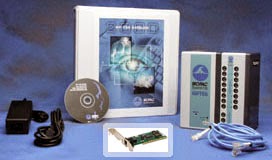 Their physiological responses (heart rate, impedance
cardiography, cardiac output) were recorded using a BIOPAC MP150 Data Acquisition research system connected with
an ECG amplifier. The researchers found that in the anger group that
participant’s exhibited different physiological responses from those who were
not required to report. The shame condition however, seemed to show no
significant difference between the two groups (reporting and not reporting).
This study suggests that the act of reporting may have a substantial impact on
the body’s action to emotional situations. The data seems to point that
individuals who are provoked (anger) are likely to exhibit different
physiological responses when reporting. The knowledge that they will have to
explain their heightened emotions brings a rationale to an otherwise irrational
behavior. Shame on the other hand causes individuals to ruminate or
self-reflect, which would explain the little difference between the two
groups.
Their physiological responses (heart rate, impedance
cardiography, cardiac output) were recorded using a BIOPAC MP150 Data Acquisition research system connected with
an ECG amplifier. The researchers found that in the anger group that
participant’s exhibited different physiological responses from those who were
not required to report. The shame condition however, seemed to show no
significant difference between the two groups (reporting and not reporting).
This study suggests that the act of reporting may have a substantial impact on
the body’s action to emotional situations. The data seems to point that
individuals who are provoked (anger) are likely to exhibit different
physiological responses when reporting. The knowledge that they will have to
explain their heightened emotions brings a rationale to an otherwise irrational
behavior. Shame on the other hand causes individuals to ruminate or
self-reflect, which would explain the little difference between the two
groups.