Showing posts with label EDA. Show all posts
Wearable | Stress Detection Using Wearable Physiological & Sociometirc Sensors

Wearable | Flow State in VR Video Games

Having physiologic indicators of a flow state not only assists future research, but also provides a method for real-time feedback on the efficacy of the game. The authors note that with better biometric data comes the opportunity to provide a better gaming experience, with real-time adjustments. If the physiologic responses and adjustments could be integrated with the gaming software, games would be far more realistic.
Wireless | Psychological Stress Across Training Backgrounds
The negative effects of stress on the body have been widely studied. Stress can be defined as a situation that is causing the current state, or homeostasis, under pressure to change. The human body’s nervous system reacts to stress by changing the amount produced of certain biomarkers. For example, when heart rate elevates, blood pressure rises and the human body reacts and secretes hormones (epinephrine, cortisol, etc.). Experimenters tested the change in the production of specific biomarkers of people with different training backgrounds to understand how acute psychological stress affects their physiological responses. The three group classifications were sedentary subjects, endurance athletes, and strength athletes.
EDA (skin conductance), ECG (EKG), and breathing frequency were measured continuously; BP and cortisol were measured after each experiment segment. EDA, ECG, and breathing frequency were measured during the acute psychological stress test using the BIOPAC MP150 data acquisition unit connected to wireless biopotential amplifiers and recorded on BIOPAC’s AcqKnowledge software.
 Psychological stress was induced in participants using a Stroop color-word test and math problems. These problems were presented in a slide show where the subjects had a limited amount of time to solve for the correct answers. The researchers found numerous differences in changes in the biomarkers measured in response to the acute psychological stress activities between the three groups. On average, athletes’ cortisol levels changed differently when compared to the sedentary group. Also, skin conductance was shown to have higher levels in the sedentary group than in the athletes. The athletes also had a higher recovery level for systolic blood pressure, which was observed to decrease over the test for the sedentary group.
The participants reported to have experienced psychological stress over the course of the activities and this was reinforced by the change in values of the biomarkers measured. This experiment showed that people with different training backgrounds had different responses to psychological stress for related biomarkers. The experimenters concluded that people with different training backgrounds react differently in their changes of certain biomarkers to psychological stress.
EDA (skin conductance), ECG (EKG), and breathing frequency were measured continuously; BP and cortisol were measured after each experiment segment. EDA, ECG, and breathing frequency were measured during the acute psychological stress test using the BIOPAC MP150 data acquisition unit connected to wireless biopotential amplifiers and recorded on BIOPAC’s AcqKnowledge software.
Psychological stress was induced in participants using a Stroop color-word test and math problems. These problems were presented in a slide show where the subjects had a limited amount of time to solve for the correct answers. The researchers found numerous differences in changes in the biomarkers measured in response to the acute psychological stress activities between the three groups. On average, athletes’ cortisol levels changed differently when compared to the sedentary group. Also, skin conductance was shown to have higher levels in the sedentary group than in the athletes. The athletes also had a higher recovery level for systolic blood pressure, which was observed to decrease over the test for the sedentary group.The participants reported to have experienced psychological stress over the course of the activities and this was reinforced by the change in values of the biomarkers measured. This experiment showed that people with different training backgrounds had different responses to psychological stress for related biomarkers. The experimenters concluded that people with different training backgrounds react differently in their changes of certain biomarkers to psychological stress.
Wireless, Wearable | Quality of Life Technologies
There is a major concern growing in the medical community that the ratio of health workers to population size is decreasing. This means that the number of available doctors and medical professionals is starting to become too small to handle the number of people needing medical help. Technologies are therefore being created to help bridge the gap that is being created. These “Quality of Life Technologies” (QoLTs) have been developed to help monitor the health of people. While these technologies have been able to provide physiological support to individuals, the same could not be said for mental symptoms. If QoLTs could move into the realm of psychology and self-therapy, they could help improve the mood and quality of life for patients. A group of researchers from the Polytechnic University of Bucharest and the University of Lincoln recently published a paper that presents a machine learning approach for stress detection using wearable physiological amplifiers. To induce stress in participants, the researchers had them perform both a public speaking and cognitive task, which according to previous research these tasks caused the highest increase in measurable signals.
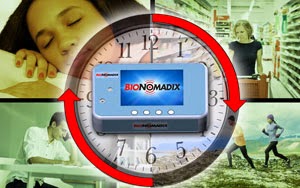
 For their experimental setup, they used a BIOPAC BioNomadix BN-PPGED wireless transducer, hooked up to an MP150 data acquisition system, to record both EDA and PPG signals. They then used AcqKnowledge 4 software to extract both the PPG autocorrelation signal and Heart Rate Variability (HRV). Their results provided accurate stress detection in individuals. Their analysis marks a good starting point toward real-time mood detection, which could lead to people improving their quality of life. One way they could improve their experimental setup however, would be to use the BioNomadix Logger. This device allows for up to 24 hours of high quality data logging allowing the researchers to analyze a subject’s data from when they encountered stressful situations outside the lab.

Wireless Physiology | Psychophysiological Measures of Emotion
Sympathetic nervous system (SNS) activity provides objective data for
assessing emotional reactions. Electrodermal Activity (EDA) is a popular SNS
measure. EDA is basically an index of the electrical activity of the skin; sweat
glands in the skin are filled with tiny amounts of sweat and sweat contains ions
that conduct current, which can be detected and recorded. Increases in EDA
reflect increases in sympathetic nervous SNS activity. EDA is also referred to
as skin conductance (SCR, SCL, etc.) or galvanic skin response
(GSR).
 Significantly, EDA can provide time-stamped information for
moment-to-moment reaction measurement throughout a message/stimulus presentation
(such as an advertisement).Combining physiological data with self-reported data
helps provide a more complete, more accurate understanding of a participant’s
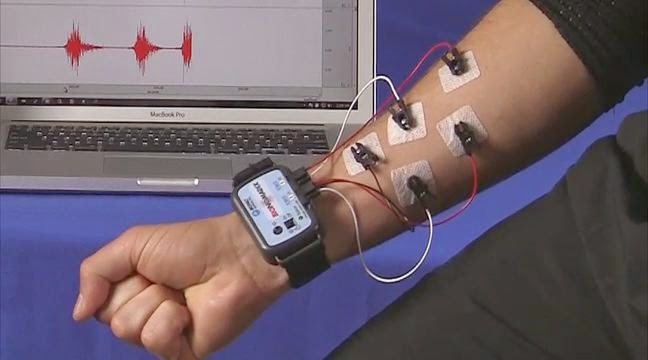
emotional reactions. Unobtrusive, wearable wireless physiology devices (such as BioNomadix
BN-PPGED from BIOPAC Systems, Inc.) can
provide continuous and precise measures of nervous system activity, such as EDA,
ECG, and RSP.
Significantly, EDA can provide time-stamped information for
moment-to-moment reaction measurement throughout a message/stimulus presentation
(such as an advertisement).Combining physiological data with self-reported data
helps provide a more complete, more accurate understanding of a participant’s
emotional reactions. Unobtrusive, wearable wireless physiology devices (such as BioNomadix
BN-PPGED from BIOPAC Systems, Inc.) can
provide continuous and precise measures of nervous system activity, such as EDA,
ECG, and RSP.
Read
a case study at “Hooked on a Feeling: Implicit Measurement of Emotion Improves Utility of Concept Testing.” Researchers conducted a message-testing study in which
they measured physiological
arousal (via EDA), emotional valence (via continuous rating dial data), and discrete
emotions (retrospectively reported emotional
reactions), among other measures. Researchers used a BIOPAC MP150 data
acquisition system and wireless EDA BioNomadix module to collect EDA while
participants viewed each ad, and a BIOPAC variable assessment transducer to
assess in-the-moment feelings of positivity or negativity. E-Prime was used to
allow for precise synchronization across stimuli presentation and data
collection.