Showing posts with label Biotechnology. Show all posts
Biomechanics Transducers | Data Acquisition
Biomechanics
data can include measures of force and motion of body position, posture, and
joint movement over a wide range of static and dynamic conditions. Biomechanics
measurements are meaningful for a wide variety of research applications, such as
biomedical engineering, exercise physiology, sports training or rehab, and
ergonomics (for characteristics of a specific work activity or environment).
Biomechanics transducers include goniometers, torsiometers, and
accelerometers. Transducers are unobtrusive and lightweight, and can be worn
comfortably and undetected under clothing or attached to external
equipment—leaving the subject to move freely in the normal
environment.
Biomechanics transducers connect directly to the BIOPAC Acquisition Unit as part of an MP or BSL System. For a more complete physiological analysis, additional signals can be recorded (e.g., EMG, respiration, heart rate) and video data can be tightly-synchronized for a clear and detailed view of the biomechanics of a movement with the subject’s physiological data.
Goniometers incorporate gauge elements that measure bending strain along or around a particular axis and transform angular position into a proportional electrical signal. The gauge mechanism allows for accurate measurement of polycentric joints. As the joint moves through a determined angle, the relative linear distance between the two mounting positions will change. A telescopic endblock prevents the measuring element from becoming over-stretched or buckled as the limb moves. The bending strain is proportional to the sum total angular shift along the axis. Because the bending force is extremely small, the output signal is uniquely a proportional function of the angular shift.
 Twin-axis goniometers measure rotation about two orthogonal planes
simultaneously to record limb angular movement, such as adequate bending in the
elbows or knees, unsafe rounding in the lower spine, wrist or ankle
flexion/extension, abduction/adduction, radial/ulnar deviations, etc.
Single-axis goniometers measure the angle in one plane only and are used to
record digit joint movement of fingers, thumb or
toes.
Twin-axis goniometers measure rotation about two orthogonal planes
simultaneously to record limb angular movement, such as adequate bending in the
elbows or knees, unsafe rounding in the lower spine, wrist or ankle
flexion/extension, abduction/adduction, radial/ulnar deviations, etc.
Single-axis goniometers measure the angle in one plane only and are used to
record digit joint movement of fingers, thumb or
toes.
Torsiometers measure rotation about a single axis (e.g., forearm pronation/supination) to record angular twisting (as opposed to bending) of the torso, spine or neck.
Tri-Axial Accelerometers are high level output transducers that provide three outputs to measure acceleration along the X-, Y- and Z-axes simultaneously. To reliably record head tilt, place an accelerometer on the head. To measure accelerations when performing slow movements, such as walking and hand tremor, ±5 G accelerometers are optimal; ±50 G are more suitable for quick movements, such as swinging a tennis racket.
For applications where quick or rapid movements are involved, fit a “sock” bandage over the whole sensor and interconnect lead. For accurate results from long recordings, use double-sided adhesive between the endblocks and skin, and place single-sided adhesive tape over the top of the endblocks. No tape should come into contact with the spring. The connection lead should also be taped down near the sensor element.
Biomechanics transducers connect directly to the BIOPAC Acquisition Unit as part of an MP or BSL System. For a more complete physiological analysis, additional signals can be recorded (e.g., EMG, respiration, heart rate) and video data can be tightly-synchronized for a clear and detailed view of the biomechanics of a movement with the subject’s physiological data.
Goniometers incorporate gauge elements that measure bending strain along or around a particular axis and transform angular position into a proportional electrical signal. The gauge mechanism allows for accurate measurement of polycentric joints. As the joint moves through a determined angle, the relative linear distance between the two mounting positions will change. A telescopic endblock prevents the measuring element from becoming over-stretched or buckled as the limb moves. The bending strain is proportional to the sum total angular shift along the axis. Because the bending force is extremely small, the output signal is uniquely a proportional function of the angular shift.
Torsiometers measure rotation about a single axis (e.g., forearm pronation/supination) to record angular twisting (as opposed to bending) of the torso, spine or neck.
Tri-Axial Accelerometers are high level output transducers that provide three outputs to measure acceleration along the X-, Y- and Z-axes simultaneously. To reliably record head tilt, place an accelerometer on the head. To measure accelerations when performing slow movements, such as walking and hand tremor, ±5 G accelerometers are optimal; ±50 G are more suitable for quick movements, such as swinging a tennis racket.
For applications where quick or rapid movements are involved, fit a “sock” bandage over the whole sensor and interconnect lead. For accurate results from long recordings, use double-sided adhesive between the endblocks and skin, and place single-sided adhesive tape over the top of the endblocks. No tape should come into contact with the spring. The connection lead should also be taped down near the sensor element.
Neuromarketing Solutions | Data Acquisition
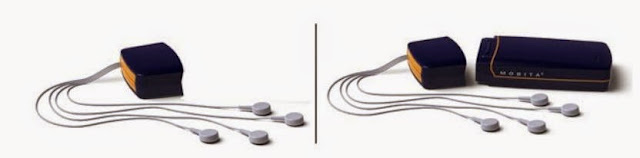
Neuromarketing solutions are available that allow you to examine physiological responses to products, environments, other stimuli or decision making tasks. Multiple physiological signals can be recorded and analyzed for Neuromarketing, including EEG. EEG analysis options allow for understanding of the subject's cognitive state for a variety of Neuromarketing tasks. Gauging level of engagement, workload and drowsiness while performing tasks or participating in consumer test situations can provide valuable insight into product development and marketing. Neuromarketing solutions should be as unobtrusive as possible, allowing for wireless EEG and other physiological signals to be recorded and analyzed from mobile subjects. Whether subjects are in a lab or real-world environment, users should have the ability to stream physiological data live or record and log up to 32-channels of high-quality biopotential data.
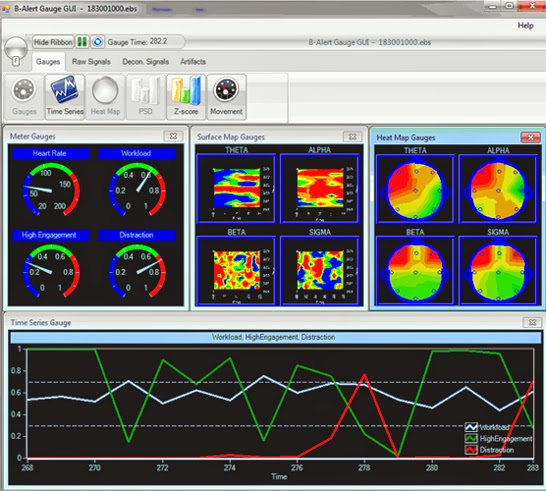
For some applications, long-term activity studies may be necessary. Solutions are available that allow users to monitor subjects in their home environment over multiple hours or days. For example, record ECG, EEG, Respiration, EMG, and GPS positioning data to look at overall activity levels and physiological responses to different Neuromarketing stimuli and daily activities that include product interactions.
MP150 Data Acquisition Software

AcqKnowledge is the next generation in data acquisition and analysis.
With BIOPAC Systems’ MP System and AcqKnowledge acquisition software, research is more efficient than ever. Record, organize, manage and analyze data easily with AcqKnowledge’s intuitive interface and updated features.
The MP150 Data Acquisition System includes:
- Ethernet-ready data acquisition and analysis
- Ability to record multiple channels with differing samples rates
- Function to record at speeds of up to 400 kHz (aggregate)
AcqKnowledge provides numerous video tutorials which allow you to spend less time learning the software and more time recording and analyzing data. Additionally, the system can be placed in your local area network (LAN), and you can use any PC in the LAN to record from any MP150 system in the network.
AcqKnowledge Benefits and Features
BIOPAC MP150 Systems utilize AcqKnowledge software. Some of the major benefits of AcqKnowledge acquisition software include:
- Improved lab efficiency
- Enhanced security and data integrity
- Configurable user interface
- Standard Operating Procedure (SOP) template options
New for AcqKnowledge Version 4.3
The latest version of AcqKnowledge includes several exciting updates which have made the software even more easy to use than before.
Focus Areas – This feature simplifies and standardizes data analysis by allowing you to analyze data in selected regions, as well as use it with the most automated analysis routines and the Find Cycle Detector. When you set up focus areas, you can individually label them and search for cycles on these specific regions. The focus areas can then be downloaded into separate spreadsheets. For example, when conducting automated blood pressure analysis, you can download the search baseline, test phase and recovery period focus areas separately.
Channel Specific Grid Functionality – When using grids within a data file, the grids can be enabled or disabled for different graphs. For instance, if you need a different grid for ECG and Alpha EEG waveform on the same graph, you can adjust and customize each grid. This new tool also allows you to save graph templates and presets for future use.
Linked Acquisitions – Linked Acquisitions allows you to record from multiple MP150s, MP36Rs, B-Alert Headsets and BioHarness. You can choose from multiple synchronization methods and specify whether or not to create a merged data file at the end of recording. The merged data file then will contain all of your channels of data from each recording, with independent data files for each device.
Locate Animal ECG Complex Boundaries – This new system locates and marks animal ECG complex boundaries, and functions the same way as the Locate Human ECG Complex Boundaries. However, this feature is optimized for the faster heart rates of small animals. To use the Locate Animal ECG Complex Boundaries, simply enter in the average heart rate for the file, run the routine locater and mark the ECG complex boundaries.
New Preset Options – Presets help save time on recording and analysis. Rate, expression and box configuration presets are available for both calculation channel set-up and offline analysis. When using this feature, you simply specify the number of horizontal and vertical measurement boxes desired, and then save as a preset for future use.
New User Interface Features – Version 4.3 includes many new user interface features, including tabbed window display (multiple tabs containing different tab files), textual value toolbar, selection palette enhancements, linked selections, autoscale single waveform, configure number of horizontal measurements, remove annotations from a single channel and journal docking location preference.
Pressure-Volume Loop Analysis – Baseline analysis is useful for looking at immediate drug delivery effects and when positioning a catheter. The pressure-volume loop analysis feature includes a preconfigured QuickStart template which helps you start recording quickly, and enables you to analyze pressure-volume loops data from anesthetized animals. This tool lets you easily pause recordings and run a quick baseline analysis during use, and features an intuitive loop graph display with a built-in text table.
Learn More About MP150 Data Acquisition Software
If you are interested in learning more about how the MP System and AcqKnowledge acquisition software can help you work faster and smarter, please contact BIOPAC Systems.
BIOPAC is dedicated to developing innovative, high quality and competitively priced life sciences educational and research hardware and software designed to meet customers’ needs.
Data Acquisition Software | Accelerometers
What Are Accelerometers?
Accelerometers are widely used for measuring
vibration in rotating machinery, moving vehicles, aircraft, in
structures. In this case, they are used for measuring small muscle
vibrations in the body.
New types of accelerometers and integrated sensor
systems are now replacing more traditional vibration sensors for a number
of reasons such as lower cost, better performance, rugged design, and smaller
size. The new devices offer increased sensitivity, a wider range of
operating frequencies, and much wider range of application in industry.
How do Accelerometers work?
 |
| BIOPAC Accelerometer 50 G -TSD109F |
Accelerometers work in many different ways. Some
accelerometers use the piezoelectric effect - containing microscopic crystal
structures that get stressed by accelerative forces, causing a voltage to be
generated. Another is by sensing changes in capacitance. If you have two
microstructures next to each other, they have a certain capacitance between
them. If an accelerative force moves one of the structures, the capacitance
will change. Add circuitry to convert from capacitance to voltage, and you get
an accelerometer. There are many other methods, including use of the
piezo-resistive effect and light.
What should I consider when choosing the right
accelerometer:
-Reproducibility of results
You don't just want great results, you want
results that are as accurate and reproducible as possible.
-Sensitivity - Generally
speaking, the more sensitivity the better. This means that for a given change
in acceleration, there will be a larger change in signal. Since larger signal
changes are easier to measure, you will get more accurate readings.
BIOPAC's TSD250
The TSD250 is a sensitive accelerometer for
use with BIOPAC
Vibromyography Systems that use advanced
signal analysis algorithms to monitor muscle vibration.
Accelerometers are secured over the muscle
belly and record the small vibrations that occur when the muscle is
activated. The technique allows researchers to study muscle performance and
strength balance.
VMG provides extremely reproducible results. The
single sensor solution and the lack of skin preparation improve the reliability
and reproducibility of muscle effort recordings between muscles and across
subjects.
Learn More About TSD250 Data Acquisition Software
If you are interested in learning more about
gaining access to the best data acquisition software in the industry, please
check out BIOPAC's Vibromyography Transducer TSD250. (http://www.biopac.com/VMG-transducer)
BIOPAC is dedicated to developing innovative,
high quality and competitively priced life sciences educational and research hardware and
software designed to meet customers’ needs.