Showing posts with label wireless physiology. Show all posts
Data Logging | Lumbar Multifidus (LM) Muscle
The lumbar multifidus (LM) muscle
is an important muscle that works to stabilize certain spinal segments as well
as control the extension moment of the lumbar spine. Studies have shown that
this muscle can be atrophied in people with chronic lower back pain. Physical
therapists thus frequently use lumbar extensor strengthening or stabilization
exercises for treatment of lower back pain. Researchers are still uncertain
about the influence of surface electromyographic (EMG) activity on lower back pain treatment outcomes. Recent
research has focused mostly on EMG levels during prone trunk extension (PTE) exercises and four-point
kneeling contralateral arm and leg lift (FPKAL) exercises. These recent
studies however have not focused on the selective activation of LM muscles
during lower back pain treatment exercises.
 Jun-Seok Kim, Min-Hyeok
Kang, Jun-Hyeok Jang, and Jae-Seop Oh thus sought to study
exactly that so as to provide an experimental study that established the
efficacy of the exercises as therapeutic treatment. The researchers gathered a
group of twenty healthy individuals without lower back pain who had not participated in lumbar strengthening or
stabilization exercises during
the previous six
months. Surface EMG data was
collected from the volunteers using a BIOPAC MP150 data acquisition and
analysis system as they performed the various exercises. The study found that selective
activation was higher during the FPKAL exercise than PTE, thus showing it is
the better and more effective way to treat lower back pain. While the
experiment provides good data for evaluating therapeutic exercises, future
evaluation in an actual physical therapy setting would prove
beneficial.
Jun-Seok Kim, Min-Hyeok
Kang, Jun-Hyeok Jang, and Jae-Seop Oh thus sought to study
exactly that so as to provide an experimental study that established the
efficacy of the exercises as therapeutic treatment. The researchers gathered a
group of twenty healthy individuals without lower back pain who had not participated in lumbar strengthening or
stabilization exercises during
the previous six
months. Surface EMG data was
collected from the volunteers using a BIOPAC MP150 data acquisition and
analysis system as they performed the various exercises. The study found that selective
activation was higher during the FPKAL exercise than PTE, thus showing it is
the better and more effective way to treat lower back pain. While the
experiment provides good data for evaluating therapeutic exercises, future
evaluation in an actual physical therapy setting would prove
beneficial.
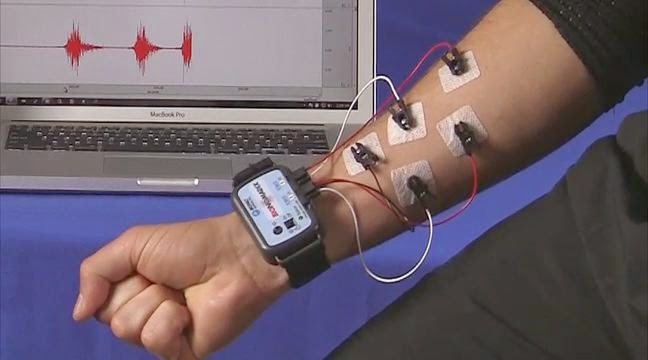
BIOPAC’s wireless BioNomadix Logger allows this type of
research to continue outside the laboratory. Subjects
who suffer lower back pain, for example, could wear the BIOPAC logging device when they are
performing PTE or FPKAL at home or during a therapeutic session.
The BioNomadix Logger’s portable
size and 24 hour data logging capability makes this type of surface EMG
recording outside the lab incredibly easy and would provide more insightful
evidence into effects of different therapeutic exercises.
Wireless Physiology | Psychophysiological Measures of Emotion
Sympathetic nervous system (SNS) activity provides objective data for
assessing emotional reactions. Electrodermal Activity (EDA) is a popular SNS
measure. EDA is basically an index of the electrical activity of the skin; sweat
glands in the skin are filled with tiny amounts of sweat and sweat contains ions
that conduct current, which can be detected and recorded. Increases in EDA
reflect increases in sympathetic nervous SNS activity. EDA is also referred to
as skin conductance (SCR, SCL, etc.) or galvanic skin response
(GSR).
 Significantly, EDA can provide time-stamped information for
moment-to-moment reaction measurement throughout a message/stimulus presentation
(such as an advertisement).Combining physiological data with self-reported data
helps provide a more complete, more accurate understanding of a participant’s
emotional reactions. Unobtrusive, wearable wireless physiology devices (such as BioNomadix
BN-PPGED from BIOPAC Systems, Inc.) can
provide continuous and precise measures of nervous system activity, such as EDA,
ECG, and RSP.
Significantly, EDA can provide time-stamped information for
moment-to-moment reaction measurement throughout a message/stimulus presentation
(such as an advertisement).Combining physiological data with self-reported data
helps provide a more complete, more accurate understanding of a participant’s
emotional reactions. Unobtrusive, wearable wireless physiology devices (such as BioNomadix
BN-PPGED from BIOPAC Systems, Inc.) can
provide continuous and precise measures of nervous system activity, such as EDA,
ECG, and RSP.
Read
a case study at “Hooked on a Feeling: Implicit Measurement of Emotion Improves Utility of Concept Testing.” Researchers conducted a message-testing study in which
they measured physiological
arousal (via EDA), emotional valence (via continuous rating dial data), and discrete
emotions (retrospectively reported emotional
reactions), among other measures. Researchers used a BIOPAC MP150 data
acquisition system and wireless EDA BioNomadix module to collect EDA while
participants viewed each ad, and a BIOPAC variable assessment transducer to
assess in-the-moment feelings of positivity or negativity. E-Prime was used to
allow for precise synchronization across stimuli presentation and data
collection.
Data Logging | Improvements in Wireless Wearables for Physiology Research

 Researchers have long recognized the need for a better tool for Electroencephalogram
(EEG) ambulatory monitoring. While many have come up with certain wired
solutions, there has not been a valid solution for long term logging or
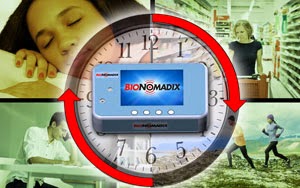
telemetry. BIOPAC Systems, Inc. has now introduced the brand new BioNomadix
Logger, a true wireless and wearable ambulatory monitoring device. The Logger
allows researchers the option for long term monitoring with its ability to
store data for later upload or it can also telemeter back to a computer for
live recording in a lab setting. The new BioNomadix logger truly allows
you to conduct physiology experiments anywhere and everywhere – you can log up
to 24 hours of high-quality data outside the lab and includes ECG,
EEG, EMG, EOG, EGG, EDA, Pulse, Respiration, Temperature, Cardiac Output, Heel
& Toe Strike, Clench Force, Accelerometer, & Goniometry signals. The
device is small in size, only about the size of your hand, making it easy for
subjects to take it with them in their everyday activities.
Researchers have long recognized the need for a better tool for Electroencephalogram
(EEG) ambulatory monitoring. While many have come up with certain wired
solutions, there has not been a valid solution for long term logging or
telemetry. BIOPAC Systems, Inc. has now introduced the brand new BioNomadix
Logger, a true wireless and wearable ambulatory monitoring device. The Logger
allows researchers the option for long term monitoring with its ability to
store data for later upload or it can also telemeter back to a computer for
live recording in a lab setting. The new BioNomadix logger truly allows
you to conduct physiology experiments anywhere and everywhere – you can log up
to 24 hours of high-quality data outside the lab and includes ECG,
EEG, EMG, EOG, EGG, EDA, Pulse, Respiration, Temperature, Cardiac Output, Heel
& Toe Strike, Clench Force, Accelerometer, & Goniometry signals. The
device is small in size, only about the size of your hand, making it easy for
subjects to take it with them in their everyday activities. The BioNomadix Logger fills the void where other more non-accessible devices could not. A study performed by researchers at the University of Minho aimed to create a wireless, wearable EEG ambulatory monitoring solution through a combination of other devices. They tested their tool against other devices (such as BIOPAC’s B-Alert X10) to measure the quality of the EEG signal. Although the researcher’s tool was able to record high quality data, it was bulky and could only be used on subjects in a lab. The BioNomadix Logger thus picks up where this study left off, allowing subjects to log data while performing everyday activities. The Logger’s small size also bypasses the bulky nature of other EEG ambulatory monitoring devices. The BioNomadix Logger thus represents a great step forward in long term wireless, wearable, ambulatory monitoring and data logging devices.
Wireless Surface EMG Modules | Data Acquisition
Physiological
data acquisition systems offer many options for recording surface EMG, needle
EMG, and fine wire EMG. General muscle activity and fatigue can be determined
by recording and analyzing surface EMG data from major muscle groups.

Correlate
EMG activity with data from other sources including force plates, goniometers,
and motion analysis equipment. Analysis software
tools, including spike counting, muscle activation location, and frequency
analysis allow for post-acquisition surface EMG data interpretation. Results of
EMG recordings can be output as graph channels for easy data visualization, or
can be in numerical format in summary tables or spreadsheets. Data can then be
used for further statistical analysis.
EMG Analysis | Biomechanics
Biomechanics
research has never been easier thanks to powerful new data acquisition and
analysis tools. Perform real-time calculations and post-data acquisition
analysis on a variety of biomechanical and physiological data.
Simultaneously
acquire up to 16 channels of biomechanics and/or gait-specific data. An example
setup could incorporate two channels of heel/toe
strike timing, ten channels of EMG signals, and
four channels of goniometry data — however combinations are virtually endless.
Record sit-and-reach tests, range of motion evaluations, muscle balance
assessments and more.
Real-time
event markers allow researchers to log important events in the data and also
include comments that can be written during or post acquisition.
After
recording, choose an automated
analysis package to interpret and score the biomechanics data. For example,
automated EMG
analysis allows for a variety of automated functions including deriving
integrated EMG, root mean square (RMS) EMG, locating muscle activation, full
frequency and power analysis, and much more.
Wireless Physiology | Data Acquisition

Research and education in the life sciences often benefits from the use of monitoring devices in which the subject being tested can move freely. BIOPAC now offers a multiple parameter ambulatory monitoring system—the BioNomadix series of wireless physiological monitoring devices.
BioNomadix
are high-quality, wireless monitoring devices that appeal to users who value
the level of accuracy that comes with wired systems, but are searching for a
data acquisition solution that enables the researcher to collect data from a
subject conducting procedures that require ample space and frequent motion.
The
BioNomadix series not only enables researchers to record high-quality data in
situations where a wired device would be limiting, it also brings comfort and
freedom to the subject. With activities such as exercising and other
high-movement tasks, the lack of wires allows the subject to conduct real-life
motions without obstruction or discomfort.
The
devices consist of a subject-worn transmitter and a receiver module.
Transmitters easily attach to any location and are used with additional leads
or transducers—short leads allow placement close to the signal source to ensure
excellent data quality. A custom, stretch mesh shirt allows multiple devices to
be worn comfortably by the subject at one time.
BioNomadix
dual-channel devices can collect data from an array of physiological signals
and signal combinations including:
ECG Dynamometry Impedance Cardiography (NICO)
EEG Respiration Electrodermal Activity
EOG Pulse Accelerometry
EMG Temperature Gyroscope
EGG Dual Strike (Heel/Toe) Goniometry/Torsiometry
Each
device is configured for the specific physiological signal type to help ensure
high-quality data at full bandwidth.
BioNomadix
wireless data sets are the latest addition to data acquisition and analysis
systems from BIOAPC that are used in thousand of labs worldwide and cited in
thousands of peer-reviewed publications.
If
you are looking for a physiological monitoring device that allows movement,
comfort and variability while still maintaining the quality, integrity and
excellence of wired devices, BIOPAC’s BioNomadix series is key to your
research.